
Kakobuy · Handover Desk
International handoff: route terms, cover and evidence
Before a parcel leaves the warehouse, save the selected logistics terms and understand what insured and uninsured claim processes actually say.
On this page
The contact changes with the stage
Kakobuy’s published service description says international logistics is provided by third-party companies. That makes the handover an important record-keeping moment. It does not establish that all of the agent’s responsibilities disappear or that a courier must pay every later claim.
Before submitting a parcel, save its item list, QC images, chosen packing, destination address, route name and paid services. After dispatch, keep the parcel number and actual tracking record. If a problem occurs, these records help support distinguish a seller discrepancy, warehouse issue and transit incident.
Read the uninsured position before choosing cover
The captured uninsured transit compensation article says Kakobuy does not take responsibility for third-party transport loss or damage and can assist with a carrier claim. It lists exclusions including customs-related situations, address errors, fragile items and records marked successfully delivered. This describes a published claim process; it is not a finding about the legal merits of an individual case.
If tracking stops, first ask for a trace. A quiet tracking interval is not by itself proof of loss. Request the carrier’s investigation reference, the relevant deadline and the evidence needed. Keep a copy of the response alongside the parcel record.
Policy example: Uninsured international transport terms, captured 10 October 2026. Check the applicable current terms.
Three covers, with route-specific conditions
| Cover in the captured policy | Published basis | What to verify before paying |
|---|---|---|
| Delay | 20% of the shipping fee after the route’s stated 30- or 40-day threshold from shipment. | The eligible route, exact start date and excluded causes; not every late parcel qualifies. |
| Customs hold | Compensation depends on the parcel and applicable criteria. | Covered destinations, prohibited goods, documents and recipient-cooperation exclusions. |
| Loss or damage | Actual freight plus actual goods value, within the insured amount and policy criteria. | Evidence, fragile-item exclusions, claim reporting and the insurer’s confirmation of the event. |
The captured general formula deducts any earlier delay compensation from a later qualifying final payment. A larger insured amount does not by itself increase the actual value of the goods or remove exclusions. Save the criteria shown with the selected route and the insurance purchase record; a green icon is an entry point to those terms, not the full policy.
Policy example: Kako Insurance compensation standard, captured 10 October 2026. Check the applicable current terms.
Check exclusions against the journey you can manage
- Recipient-caused loss or damage, late collection and delivery failure can affect cover. Keep contact details correct and respond to the carrier.
- The delay wording excludes several events, including specified weather, conflict, customs inspection and recipient clearance or tax failures. Read the route-specific version.
- A customs hold caused by failure to cooperate or pay required taxes is excluded in the captured customs-hold wording.
- Fragile or restricted goods need an explicit route and coverage check; reinforcement does not rewrite a damage exclusion.
These actions improve the record and reduce avoidable problems. They do not guarantee acceptance or compensation. If the route cannot support the goods or the evidence required, reconsider shipping that item through it.
Make the decision at parcel submission
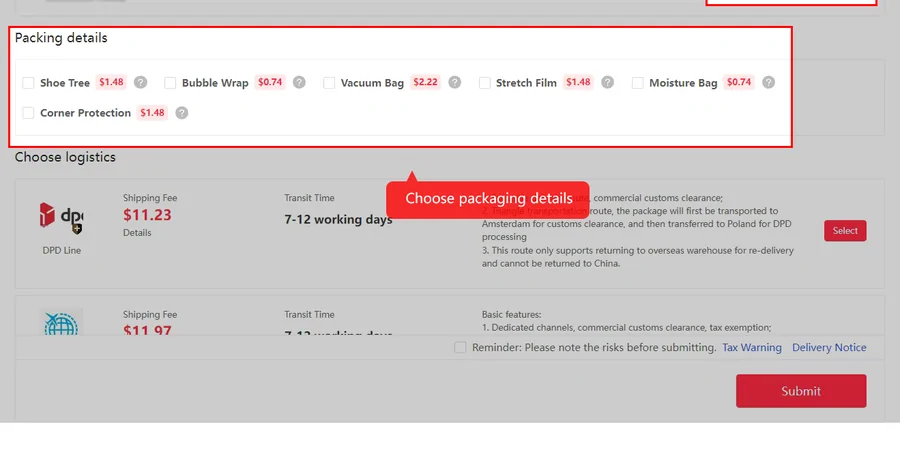
Compare packed chargeable weight, destination restrictions, tracking, return service and cover together. The cheapest displayed rate may exclude a material, require a minimum weight or offer no overseas return. Read those conditions before using price as the deciding factor.
Keep a trace and a compensation claim separate
A trace asks where the parcel is; a claim asks whether an event meets the applicable compensation terms. You may need to start a trace while a claim is not yet eligible. Do not let a general “under investigation” reply replace the exact next action or any reporting deadline.
Keep a short case log: parcel number, international and local tracking numbers, last event, contact channel, case reference, evidence requested and next review date. Ask who will supply the next update and whether you need to contact the local carrier as well. A promised review date is not a delivery guarantee.
If tracking later changes to delivered or held for collection, update the case and follow the local-delivery procedure. If compensation is proposed, ask for the policy basis and itemised amount; the trace result alone does not establish the payment due.